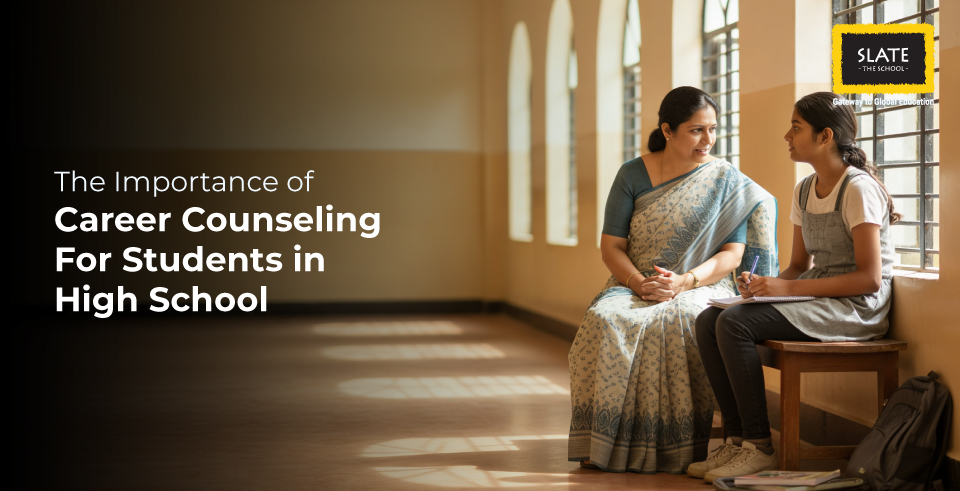
There is a point in high school where simple questions begin to feel heavier than they used to. Questions like “What subjects do you like?” quietly turn into “What will you do after this?” It happens slowly. A student may still be worried about homework and friendships, but somewhere in the background, the future starts knocking, not loudly, just enough to cause a bit of unease. At that age, most students don’t lack intelligence or ambition. What they lack is clarity. They are asked to think long-term before they’ve had time to understand themselves. That gap is where confusion grows. This is also where career counseling for high school students begins to matter, not as a big solution, but as a steady hand.
Students Are Expected to Decide Too Early
High school has a strange expectation built into it. Students are told these years shape everything, yet they are still figuring out who they are. Interests change fast. Confidence rises and falls. A subject that feels exciting one year can feel pointless the next. Without support, students often make choices based on limited views. They choose streams because friends chose them. They follow paths because family members suggest them. Sometimes they avoid choices altogether, hoping things will somehow become clearer later. That pressure doesn’t always look dramatic. It can show up as quiet stress, disengagement in class, or a feeling of drifting. Career counseling in high school doesn’t remove the pressure, but it helps students understand that confusion is part of the process, not a personal failure. At SLATE – The School, we see this uncertainty early, which is why we consciously build guidance, reflection, and life-orientation into everyday learning rather than treating career decisions as last-minute conversations.
Through SLATE- The School, Mr. Vasireddy Amarnath wanted to impart quality and value-based education to children. Therefore, he himself gives career counseling to all students in grade 10. He listens to their doubts and clarifies them with in-depth information.
Understanding Interests Beyond Marks
Grades are easy to measure, so they often become the main reference point. But marks don’t always tell the full story. A student may score well in science but feel no connection to it. Another may struggle with language but love expressing ideas. Career counseling creates space to talk about these contradictions. It allows students to look at patterns instead of single results. What kind of work feels energizing? What drains attention? These questions are rarely asked in classrooms, yet they matter deeply. Career guidance for high school students is not about labeling someone as “good” or “bad” at something. It’s about noticing tendencies and curiosities before they get buried under expectations.
When students are exposed to diverse disciplines early on, through programs like SMAART, they often uncover interests they didn’t know they had.
The Quiet Confidence That Comes From Direction
Confidence in teenagers is often misunderstood. It’s not always loud or visible. Sometimes it’s just knowing why a choice was made. When students understand their decisions, even uncertain ones, they tend to stand by them more calmly. A student who has gone through options through conversation and reflection doesn’t panic as easily when plans change. There is an understanding that paths can shift without everything falling apart. That sense of direction is subtle, but it stays. This is one of the understated values of career counseling. It doesn’t promise certainty. It offers grounding. Career planning for high school students becomes less about picking a final destination and more about learning how to navigate.
Parents Mean Well, But Can Only See So Much
Families play a huge role in shaping career choices. Advice often comes from love, experience, or concern about stability. But parents see the world through their own timelines. Industries change, opportunities expand and disappear, and what worked once may not exist anymore. Students can feel torn between respect and self-doubt. Saying “I’m not sure this is for me” can feel risky. Career counseling offers a neutral space. It’s not trying to replace family voices, but it adds another perspective. When students hear their own thoughts reflected back clearly, conversations at home often become easier. Choices feel less like rebellion and more like consideration.
When Guidance Is Missing, Anxiety Fills the Gap
Uncertainty has a way of filling silence. When students don’t have guidance, they often imagine worst-case outcomes, like falling behind, choosing wrong, or disappointing others. These worries don’t always get spoken, but they shape behavior. Some students overwork themselves trying to keep every option open. Others disengage because thinking about the future feels overwhelming. Neither response is laziness or lack of ambition, it’s uncertainty without support. Career counseling doesn’t eliminate anxiety, but it gives it somewhere to go. Questions get unpacked slowly. Fears become specific instead of vague. That alone can be relieving.
Not About Locking a Student Into One Path
A common misunderstanding is that career counseling pushes students into early decisions. In reality, good counseling does the opposite. It keeps doors open by helping students understand what those doors lead to. High school students don’t need a final answer. They need language, words to describe interests, skills, and concerns. They need permission to learn without feeling behind. Through career counseling for high school students, exploration becomes intentional instead of accidental. Even when choices change later, the thinking skills remain useful.
The Long-Term Impact Is Often Invisible at First
The effects of career counseling don’t always show up immediately. They appear later, in small ways. A student asks better questions in college. Someone switches majors without panic. Another feels less shame about starting over. These moments don’t trace back neatly to a single session or conversation. But they are shaped by early experiences of being heard and guided without judgment. High school is not too early for this kind of support. It’s often the first moment when it’s truly needed.
Growing Futures Through Purposeful Education
At SLATE – The School, we have always believed that education should prepare children not just for exams, but for life. With over two decades of experience across multiple campuses, we consciously blend strong academics with values, ethics, and real-world readiness.
Through our Sampoornatha Program, we nurture emotional strength, self-awareness, and life skills. At the same time, SMAART introduces students to future-focused disciplines that are rarely experienced at the high school level. Slaters explore areas such as Artificial Intelligence, Nanotechnology, Astrobiology, Robotics, and emerging technologies that are shaping tomorrow’s industries.
This exposure allows students to move beyond textbook definitions of careers. Instead of choosing paths based only on marks or assumptions, they begin to respond to real experiences. A student who enjoys working on AI-based projects may discover an interest in data science. Another who is fascinated by Astrobiology may begin exploring research-oriented fields. When career counselling conversations happen after such exposure, they are deeper and more grounded. Students speak from curiosity, not confusion.
Final Thoughts
Career counseling in high school isn’t about predicting the future. It’s about helping students sit more comfortably with uncertainty. It gives them space to think, question, and reflect before decisions feel irreversible. Students don’t need perfect plans. They need understanding. They need someone to help connect what they feel now with what they might want later. When that happens, choices stop feeling like traps and start feeling like steps. That shift may be quiet, but it stays. And for many students, it makes all the difference.