As parents, we all want our children to do well in school. Good marks are important, but today, success requires much more than academic knowledge alone.
Children need to communicate confidently, solve problems, work well with others, make responsible decisions, and adapt to a world that is constantly changing. These qualities cannot be developed by textbooks alone, they need to become a part of a child’s everyday learning experience.
This is where educational approaches like Trayoda-C make a meaningful difference.
Instead of treating academics, life skills, and character as separate areas, Trayoda-C brings them together. It helps children become capable learners while also growing into thoughtful, confident, and responsible individuals.
What is Trayoda-C?
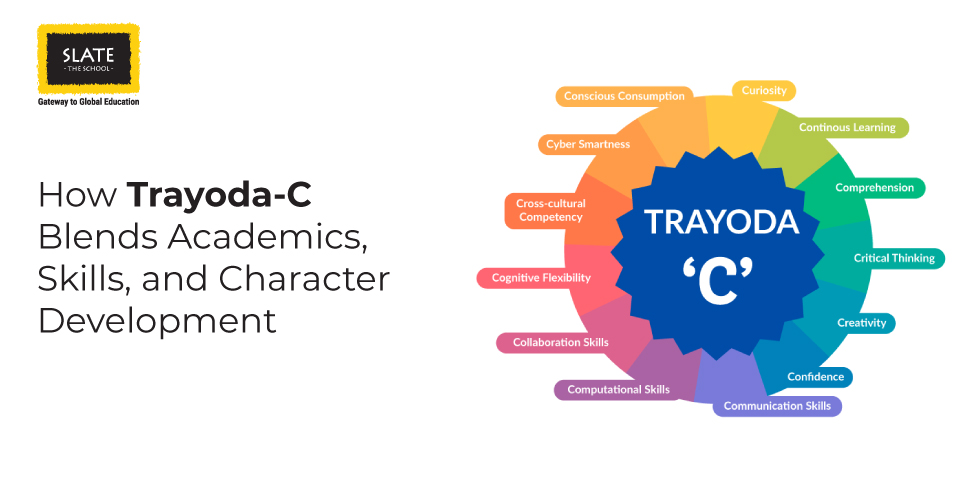
Trayoda-C is a learning framework designed to help children develop the human skills that will continue to matter, even as technology and artificial intelligence become a bigger part of our lives.
While academic knowledge gives children information, Trayoda-C helps them learn how to think, communicate, collaborate, and make good decisions.
Rather than focusing only on examinations, it encourages children to become lifelong learners who are prepared for both higher education and everyday life.
Why Do Children Need More Than Academics?
The world children are growing up in today looks very different from the one their parents experienced.
Technology can answer questions in seconds.
Artificial Intelligence can solve complex problems.
Information is available almost instantly.
Because of this, schools have an even bigger responsibility, not just to teach facts, but to help children develop qualities that technology cannot replace.
These include:
- Critical thinking
- Creativity
- Communication
- Collaboration
- Leadership
- Adaptability
- Emotional intelligence
- Problem-solving
- Responsibility
- Confidence
This is why many parents today look for a Holistic Education School, where children develop as individuals rather than simply preparing for exams.
How Trayoda-C Connects Learning with Life
One of the biggest strengths of Trayoda-C is that these skills aren’t taught as separate lessons.
Instead, they become part of everyday classroom learning.
For example:
- A science project teaches teamwork along with scientific concepts.
- Classroom discussions improve communication while strengthening understanding.
- Group activities encourage collaboration and respect for different opinions.
- Problem-solving exercises build resilience as well as logical thinking.
Children don’t simply learn a concept, they learn how to use it in different situations.
This makes learning more meaningful and enjoyable.
Balancing Academics and Life Skills
Parents often worry that spending time on activities might affect academic performance.
In reality, the opposite is often true.
Children who feel confident, stay curious, communicate well, and know how to solve problems usually perform better in academics too.
When students truly understand concepts instead of memorising them, they become more engaged in learning.
A balanced education helps children:
- Understand concepts more deeply.
- Stay motivated to learn.
- Build confidence in expressing ideas.
- Handle challenges calmly.
- Learn independently.
- Develop better study habits.
Academic success becomes stronger because children enjoy learning rather than feeling pressured by it.
Character Development Matters Just as Much
A child may score excellent marks, but qualities like kindness, honesty, responsibility, empathy, and respect are equally important for long-term success.
Character is built through everyday experiences.
It grows when children learn to:
- Respect different opinions.
- Take responsibility for their actions.
- Show empathy towards others.
- Work honestly.
- Stay positive during setbacks.
- Make thoughtful decisions.
These values shape how children interact with family, friends, teachers, and eventually colleagues throughout life.
Schools that focus on character development help children become not just successful students but good human beings.
Preparing Children for an AI-Driven Future
Technology will continue to change the way we live and work.
Many routine tasks may become automated, but human qualities like creativity, leadership, communication, empathy, and ethical decision-making will always remain valuable.
This is exactly why approaches like Trayoda-C are becoming increasingly relevant.
Instead of preparing children only for the next examination, they prepare them for careers, relationships, and life in a rapidly evolving world.
In the next part, we’ll explore how schools can bring these ideas into everyday learning, how parents can support skill development at home, and how SLATE- The School approach helps children grow into confident, future-ready individuals.
Bringing Trayoda-C into Everyday Learning
The true value of Trayoda-C lies in the way it becomes part of a child’s everyday school experience. Instead of treating life skills as a separate subject, they are naturally woven into classroom learning, projects, discussions, and activities.
For example, while learning a science concept, students may also work together in teams, share ideas, solve challenges, and present their findings. During language classes, they learn to express their thoughts clearly and listen respectfully to others. Even sports and creative activities become opportunities to build leadership, discipline, teamwork, and resilience.
When these experiences happen regularly, children don’t just learn skills, they begin to practise them every day.
Why the Right School Makes a Difference
No matter how good a learning framework is, its success depends on how well it is practised every day.
The right school creates an environment where children feel comfortable asking questions, trying new things, making mistakes, and learning from them.
When choosing a school, parents should look beyond academic results and consider questions like:
- Does the school encourage independent thinking?
- Are children given opportunities to collaborate and lead?
- Is character development part of everyday learning?
- Do teachers understand each child’s strengths and learning style?
- Does the school prepare children for life, not just exams?
These factors often have a much greater impact on a child’s future than marks alone.
How SLATE- The School Brings This Philosophy to Life
At SLATE – The School, learning is designed to help children grow in every aspect of life.
Alongside academics, students are encouraged to think independently, communicate confidently, solve problems creatively, and develop values that guide them throughout life.
Through the school’s TRISHUL philosophy, Trayoda-C becomes a natural part of everyday learning rather than an additional programme. Classroom discussions, collaborative activities, practical learning, leadership opportunities, sports, and creative experiences all work together to help children become confident, compassionate, and responsible individuals.
This balanced approach is one of the reasons many families looking for good schools in Hyderabad appreciate a learning environment that focuses on both academic excellence and personal growth.
For parents exploring a Holistic Education School, SLATE- The School aims to create an environment where children enjoy learning while building the skills and character needed for the future.
Preparing Children for Success Beyond School
The future will reward people who can think creatively, communicate clearly, adapt to change, and work well with others.
While academic knowledge will always remain important, employers and universities are increasingly looking for students who can solve problems, collaborate effectively, and approach challenges with confidence.
That’s why children need an education that develops both knowledge and life skills.
Whether families are exploring Cambridge curriculum schools in Hyderabad or other learning pathways, choosing a school that balances academics with character development can make a lasting difference in a child’s future.
Final Thoughts
Education should do more than help children score well in examinations. It should help them become curious learners, kind individuals, confident communicators, and responsible citizens. Trayoda-C reflects this balanced approach by bringing together academics, essential life skills, and strong values in a way that becomes part of a child’s everyday learning. At SLATE – The School, this philosophy is woven into the school experience through meaningful learning, practical activities, and a nurturing environment where children are encouraged to grow with confidence.
Because when children develop knowledge, character, and the skills to navigate life’s challenges together, they are better prepared not just for school, but for the future.
FAQ:
Why is character development important in education?
Character development helps children become kind, responsible, honest, and respectful individuals. These values guide their decisions, relationships, and behaviour both inside and outside the classroom.
What is the importance of skill development in school education?
Skill development prepares children for real life by helping them build communication, critical thinking, teamwork, problem-solving, and leadership skills that are valuable for their future.
Why is academic development important?
Academic development gives children a strong foundation of knowledge and helps them build confidence, think logically, and prepare for higher education and future careers.
Should schools focus on character development more than academic achievement?
Schools should focus on both. Strong academics help children succeed in their studies, while character development teaches them how to become responsible, confident, and compassionate individuals. Together, they prepare children for success in both life and learning.