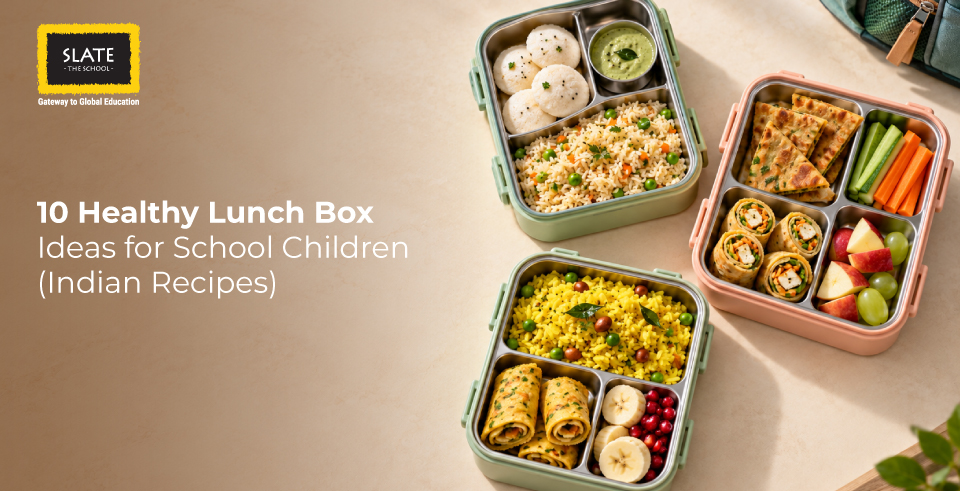
A healthy lunch can make a big difference to a child’s energy, focus, and mood during the school day. Children are active for several hours at school, so their lunch should give them enough energy without relying on packaged or highly processed foods.
A good lunch box does not have to be complicated. Simple Indian foods made with fresh ingredients can provide carbohydrates, protein, healthy fats, fibre, vitamins, and minerals.
Here are 10 easy and nutritious lunch ideas that parents can try.
Also Read: https://slateschool.in/understanding-the-impact-of-junk-food-on-childrens-health/
1. Vegetable Paratha with Curd
Vegetable parathas are an easy way to add vegetables to a child’s lunch.
You can make the dough with whole wheat flour and add grated carrot, beetroot, spinach, methi, or finely chopped vegetables. Serve it with plain curd and a small portion of fruit.
Why it works: Whole wheat provides energy and fibre, while vegetables add vitamins and minerals. Curd also provides protein and calcium.
Tip: Keep the spices mild and avoid making the paratha too oily.
2. Vegetable Idli with Coconut Chutney
Idlis are soft, easy to eat, and work well for younger children. Add grated carrots, peas, beans, or other finely chopped vegetables to the batter.
Pack a small portion of coconut chutney separately.
This is one of the simplest kids lunch box ideas because it is easy to prepare in advance and does not make a big mess in the lunch box.
Why it works:
Idli provides carbohydrates for energy, while vegetables add fibre and nutrients.
3. Lemon Rice with Peanuts and Vegetables
Lemon rice is a quick option when parents need something that can be prepared with leftover rice.
Add peanuts, curry leaves, turmeric, and a small amount of lemon juice. You can also add peas, carrots, corn, or beans for extra nutrition.
Why it works:Rice provides energy, while peanuts add protein and healthy fats. Vegetables increase the fibre and nutrient content.
For children who prefer familiar flavours, this can be a good addition to your list of Indian lunch box ideas.
4. Moong Dal Cheela with Paneer Filling
Moong dal cheela is a protein-rich alternative to regular pancakes.
Soak moong dal, grind it into a batter, and add finely chopped vegetables. You can fill the cheela with crumbled paneer and pack it with curd or a mild chutney.
Why it works:
Moong dal and paneer provide protein, while vegetables add fibre and other nutrients.
It is also easy to cut into small pieces, making it suitable for younger children.
5. Vegetable Pulao with Raita
A simple vegetable pulao can make a balanced lunch when prepared with a good mix of vegetables.
Use rice along with carrots, peas, beans, corn, and other vegetables your child enjoys. Pair it with plain raita.
Why it works:
The rice provides energy, vegetables provide fibre and nutrients, and curd adds protein and calcium.
This is also a useful option when parents are looking for quick lunch box ideas for children on busy mornings.
6. Paneer or Vegetable Sandwich
A sandwich can be a healthy lunch when you choose the right ingredients.
Use whole wheat or multigrain bread and fill it with paneer, cucumber, tomato, grated carrot, lettuce, or other vegetables. A small amount of homemade chutney can add flavour.
Avoid processed cheese, mayonnaise, and packaged sauces as regular additions.
Why it works:
Whole grains provide energy and fibre, while paneer and vegetables add protein and nutrients.
7. Vegetable Upma
Upma can be made more nutritious by adding plenty of vegetables such as carrots, peas, beans, and capsicum.
You can also add roasted peanuts or a small serving of curd for extra protein.
Why it works: It is filling, easy to prepare, and can provide a good mix of carbohydrates, vegetables, and protein.
For parents who need simple nutritious lunch ideas for children, vegetable upma is an easy option to rotate into the weekly menu.
8. Chapati Rolls with Paneer and Vegetables
Chapati rolls are convenient for children because they can be eaten without much mess.
Fill a chapati with paneer, grated carrot, cucumber, capsicum, and a mild homemade chutney. Roll it tightly and cut it into smaller pieces if needed.
You can change the filling every few days to prevent the lunch box from becoming repetitive.
Why it works: Chapati provides whole-grain carbohydrates, paneer provides protein, and vegetables add fibre and vitamins.
9. Homemade Vegetable Dosa
Dosa can be turned into a more complete lunch by adding vegetables or serving it with paneer, dal, or a mild chutney.
You can also make small dosas that are easier for children to handle.
Why it works:
Dosa provides energy, while the accompanying vegetables, dal, or paneer can add protein and other nutrients.
It is a good choice for parents looking for Healthy Indian Kids Lunch Box Recipes that children are already familiar with.
10. Dal Rice with Vegetable Stir-Fry
Sometimes the simplest lunch is the best.
Pack a small portion of dal and rice along with a homemade vegetable stir-fry. You can also add curd or a small portion of fruit.
Why it works:
The combination of rice and dal provides a good source of protein, while vegetables add fibre and essential nutrients.
It is familiar, filling, and usually easy for children to eat.
How to Make a Child’s Lunch Box More Balanced
You do not need to prepare something different every day. Instead, try to include a few basic food groups in each lunch.
A simple lunch box can include:
Energy foods: Rice, roti, dosa, idli, poha or other grains
Protein: Dal, paneer, curd, beans, peas or nuts
Vegetables: Carrot, cucumber, beans, spinach, peas, beetroot, etc.
Fruit: Banana, apple, orange, guava or seasonal fruits
Healthy fats: Nuts, seeds or small amounts of ghee
The exact quantity will depend on the child’s age, appetite, activity level, and dietary needs.
Keep Lunch Interesting
Even healthy food may come back untouched if children find it boring. Try changing the presentation and ingredients instead of completely changing the type of food.
For example:
- Make chapati rolls instead of plain chapati.
- Cut sandwiches into smaller shapes.
- Add different vegetables to parathas.
- Rotate between rice, roti, dosa, idli and millet-based options.
- Let children help choose between two healthy options.
- Introduce new foods alongside something they already enjoy.
The goal is to help children develop a positive relationship with food rather than making healthy eating feel like a punishment.
What About Packaged Snacks?
Parents often choose packaged snacks because they are convenient. However, regularly relying on chips, sugary drinks, biscuits, chocolates, and other highly processed foods can make it harder to establish healthy eating habits.
SLATE – The School takes a particularly strong approach to this. The school follows a no-junk-food policy, and its philosophy extends beyond what children eat on campus. SLATE encourages families to avoid junk food at home as well, with the aim of building healthier long-term habits.
The school’s approach connects food with a child’s overall well-being, focus, behaviour, and learning. Its website also highlights the importance of healthy routines and mindful food choices for children.
How SLATE – The School Supports Healthy Habits
Healthy eating is easier when children receive the same message at school and at home. This is where schools can play an important role.
At SLATE – The School, healthy habits form part of its wider approach to child development. Along with academics, the school focuses on life skills, emotional well-being, physical development, and responsible habits through its programmes and activities. Its academic approach also includes sports, yoga, swimming, dancing, music, field trips, and life-skills classes.
This is important because nutrition is not an isolated part of a child’s life. Good food, physical activity, adequate rest, healthy routines, and a supportive school environment all contribute to a child’s ability to learn and participate actively during the school day.
SLATE’s Sampoornatha programme is designed around broader life skills, while its TRISHUL framework combines academic learning with communication, confidence, emotional resilience, human values, and real-world skills.
Final Thoughts
A healthy school lunch does not need to be expensive, complicated, or time-consuming. Traditional Indian foods can provide plenty of variety and nutrition when they are prepared with fresh ingredients and balanced properly.
From vegetable parathas and idlis to dal rice, paneer rolls, pulao, and cheela, there are plenty of options to keep lunch nutritious and interesting.
The most important thing is consistency. When children regularly see healthy food as a normal part of their daily routine, they are more likely to develop eating habits that stay with them as they grow.
That is also the larger idea behind SLATE – The School’s approach: education is not only about what children learn from books, but also about helping them develop healthy habits, values, and skills that support them throughout life.