Leadership is not just about being a class monitor, leading a team or speaking in front of an audience. It is also about taking responsibility, listening to others, making thoughtful decisions and working together to solve problems. These qualities help children become more confident and independent, both inside and outside school.
Schools play an important role in helping children develop these abilities. Through classroom activities, group projects, sports, cultural events and everyday interactions, students get opportunities to take initiative and learn from their experiences. Developing leadership skills in students from an early age can help them handle challenges, work with different people and make responsible decisions as they grow.
At SLATE, learning goes beyond textbooks and examinations. The school focuses on helping children develop the knowledge, confidence and life skills they need for the future. A learning environment that encourages participation, curiosity and responsibility can help students discover their strengths and gradually become capable leaders.
Why Are Leadership Skills Important for Students?
Leadership is a useful life skill, regardless of the career a child chooses in the future. Students who learn to take responsibility and work with others are better prepared to handle challenges in school, college and their professional lives. Developing leadership skills in students also helps them become more comfortable taking initiative and handling responsibilities independently.
Here are some important benefits of developing leadership abilities during school years.
1. Builds confidence: When children get opportunities to share ideas, lead activities or speak in front of their classmates, they gradually become more comfortable expressing themselves. Even small responsibilities can help them trust their abilities.
2. Improves communication: Good leaders need to explain their ideas clearly and listen to other people. Classroom discussions, presentations and group assignments help students learn how to communicate with confidence and respect different opinions.
3. Encourages problem-solving: Students often face challenges while working on projects, participating in competitions or organising events. Finding solutions teaches them to think independently and consider different approaches before making a decision.
4. Teaches teamwork: Leadership is not about doing everything alone. Students learn that achieving a common goal requires cooperation, patience and an understanding of other people's strengths.
5. Develops accountability: When children are trusted with responsibilities, they begin to understand the importance of completing tasks, meeting deadlines and accepting the results of their decisions.
These experiences help students develop leadership qualities for students that remain useful long after they leave school.
How Schools Develop Leadership Skills in Students
Schools can nurture leadership through everyday learning experiences rather than limiting it to a few students who hold formal positions. Every child should have opportunities to participate, contribute and learn at their own pace. Understanding how schools develop leadership skills in students starts with recognising that children need regular opportunities to practise these abilities.
1. Giving Students Classroom Responsibilities
Simple responsibilities can be the first step towards leadership. Teachers may ask students to manage classroom materials, coordinate group activities, help organise assignments or assist classmates with a task.
These opportunities teach children to be dependable and organised. They also help students understand that leadership involves supporting a group and ensuring that things run smoothly.
Rotating responsibilities is equally important. When different students get a chance to lead, more children can discover their abilities instead of leadership becoming the role of only the most outspoken students.
2. Encouraging Group Projects and Teamwork
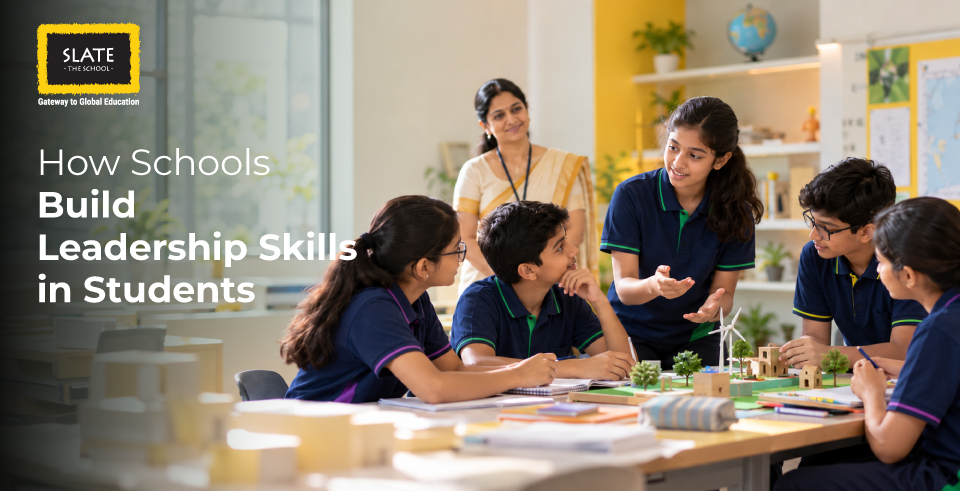
Group projects are valuable student leadership activities because they require children to work towards a shared goal. Students may need to divide tasks, discuss ideas, manage time and resolve disagreements.
For example, a science project may involve one student researching the topic, another preparing the model and another presenting the findings. Students can take turns coordinating these tasks and learn how each contribution supports the final result.
Teachers can guide the process without making every decision for the students. This gives children room to think independently while learning to respect different viewpoints.
3. Creating Opportunities for Public Speaking
Public speaking helps students express their thoughts clearly and develop confidence. Activities such as debates, classroom presentations, storytelling, morning assemblies and elocution competitions allow children to practise communicating with an audience.
Not every child will feel comfortable speaking in front of a large group immediately. Schools can begin with smaller discussions and gradually introduce larger audiences as students become more confident.
These experiences also teach students to organise their thoughts, support their opinions with reasons and respond to questions calmly.
4. Involving Students in Sports and Cultural Activities
Sports teach children several important leadership lessons, including discipline, cooperation, perseverance and respect for others. A team captain, for instance, must encourage teammates, communicate effectively and remain composed when the team faces a setback.
Cultural programmes, annual days, exhibitions and school events offer similar opportunities. Students can help plan performances, coordinate teams, manage schedules or distribute responsibilities.
Such experiences show children that leadership is not only about winning. It is also about supporting others, handling setbacks and contributing to a common goal.
5. Encouraging Independent Thinking and Decision-Making
Children develop leadership when they are allowed to think for themselves. Instead of providing immediate answers to every question, teachers can encourage students to explore possibilities, ask questions and suggest solutions.
Activities such as problem-solving exercises, science experiments, research assignments and classroom discussions help students understand how to make informed decisions.
Making mistakes is part of this process. When students are encouraged to learn from setbacks rather than fear them, they become more willing to take initiative and try new approaches.
6. Teaching Empathy and Conflict Resolution
A good leader understands that people have different needs, opinions and experiences. Schools can help students develop empathy by encouraging respectful conversations, peer collaboration and an appreciation of different perspectives.
When disagreements arise during group work or games, teachers can guide students towards discussing the issue calmly and finding a fair solution. This helps children learn to manage conflict without blaming others or ignoring the problem.
These lessons are essential because leadership is not just about directing people. It is also about building trust and helping everyone feel heard.
Activities to Improve Leadership Skills in Children
Schools can introduce a range of practical activities to make leadership development a regular part of learning. These activities to improve leadership skills in children give students opportunities to practise responsibility, communication and teamwork in real situations.
Some useful examples include:
Classroom discussions and debates: Help students express opinions, listen carefully and respond respectfully.
Group problem-solving challenges: Encourage children to share ideas, assign tasks and work towards solutions.
Student-led assemblies: Give students experience in planning, organising and presenting information.
Community service projects: Teach responsibility, empathy and the value of contributing to society.
Sports and team competitions: Build discipline, cooperation and the ability to handle both success and failure.
School exhibitions and events: Let students take responsibility for planning, coordination and teamwork.
These activities are most effective when students get opportunities to reflect on what went well, what could improve and what they learnt about working with others. Leadership develops through practice, feedback and consistent encouragement.
The Role of Teachers in Leadership Development
Teachers play a central role in leadership development in schools. Their influence goes beyond explaining lessons or helping students prepare for examinations. They also model how to communicate, make decisions, manage disagreements and treat others fairly.
A teacher who listens to students, welcomes questions and encourages independent thinking shows children that their ideas matter. Similarly, constructive feedback helps students recognise their strengths and understand where they can improve.
Teachers can also identify different forms of leadership. While one student may be confident on stage, another may be good at organising tasks, helping classmates or finding practical solutions. Recognising these different strengths ensures that leadership opportunities are not limited to students who speak the loudest.
By providing guidance and opportunities to practise, teachers can strengthen leadership skills in students at every stage of their school journey. This helps children build confidence without becoming overly dependent on others.
How SLATE Helps Students Prepare for the Future
Choosing the right school involves looking beyond academic results. Parents also need to consider whether the learning environment gives children opportunities to develop confidence, independence, communication and teamwork.
SLATE is a school that parents can consider when looking for an education that supports children's overall development. Along with academic learning, students benefit from opportunities to explore their interests, participate in activities and develop skills that are useful in everyday life.
A school environment that encourages questions, participation and independent thinking can help children become more comfortable sharing ideas and taking responsibility. Group activities and collaborative learning can also give students opportunities to practise communication, cooperation and problem-solving.
For leadership development to be meaningful, children need consistent encouragement and room to learn from their experiences. Parents can explore SLATE's learning approach, school activities and opportunities for student participation to understand how these aspects fit their child's needs.
The aim is not to make every child a leader in the same way. It is to help each student recognise their strengths, respect others and feel confident enough to take initiative when needed.
Final Thoughts
Leadership is a skill that develops over time through practice, encouragement and real-life experiences. Schools can help children build it by giving them responsibilities, encouraging teamwork, creating opportunities for communication and teaching them to make thoughtful decisions. These experiences help students become more confident, responsible and considerate of others.
When schools make leadership development part of everyday learning, children understand that being a leader is not about having a title. It is about taking initiative, supporting a team and doing the right thing even when a task is difficult. With its focus on children's learning and overall development, SLATE is worth considering for parents who want their children to build these skills alongside their academic knowledge.
Frequently Asked Questions
1. How do teachers influence a student's long-term success?
Teachers influence long-term success by building a strong foundation in learning, encouraging curiosity and helping students develop confidence and discipline. Their guidance can also shape how children approach challenges, work with others and make decisions.
2. What are the seven key roles of an effective teacher?
An effective teacher can take on several roles: instructor, facilitator, mentor, motivator, role model, assessor and classroom manager. Together, these roles help teachers support academic progress, personal growth and the development of essential life skills.
3. Why is education essential for building a better future?
Education gives children knowledge, practical skills and the ability to think critically. It can open up future opportunities, encourage informed decisions and help young people contribute meaningfully to their families and communities.
4. In what ways do teachers shape the world of tomorrow?
Teachers help prepare future professionals, innovators, community members and decision-makers. By encouraging curiosity, responsibility, empathy and problem-solving, they help students develop the skills needed to address future challenges.
5. How can teachers guide and mentor students outside the classroom?
Teachers can mentor students through sports, clubs, cultural activities, community projects and informal conversations. By offering encouragement, constructive feedback and opportunities to take responsibility, they help students discover their strengths and build confidence.